

For the community transport charity running school runs and day-centre shuttles, or the small coach firm doing airport transfers and private hire, the electric vehicle transition has always come with an unspoken catch: it isn’t really about the vehicle. It’s about where you charge it.
For the community transport charity running school runs and day-centre shuttles, or the small coach firm doing airport transfers and private hire, the electric vehicle transition has always come with an unspoken catch: it isn’t really about the vehicle. It’s about where you charge it.
Stagecoach’s newly launched Chargd proposition is a direct response to that problem. Rather than asking third-party fleets to build their own depot infrastructure from scratch, it opens the companies charge points which are engineered for high-capacity, rapid charging and larger vehicles. From early morning until very late in evening public transport buses are out on the roads. This frees up the depot and charge ports for use other bus operators and transport companies. Stagecoach have seven sites live so far (Cambridge, Oxford, Dover, Stockton, Inverness, Kilmarnock and Ash Grove in London), with more of Stagecoach’s 100-plus depot estate due to join throughout 2026 and beyond. Sites offer up to 100 ultra-rapid charging bays, a 24/7 smart energy management platform, and — at selected locations — eHGV-capable charging for logistics and utilities fleets. It builds on more than £500 million Stagecoach has already ploughed into its own electric fleet and charging infrastructure since 2021.
For a small operator weighing up an electric minibus, that’s potentially significant. But to understand how significant, it helps to look at the state of high-powered charging in the UK more broadly — because the numbers show why a scheme like this fills a real gap, not just a marketing one.
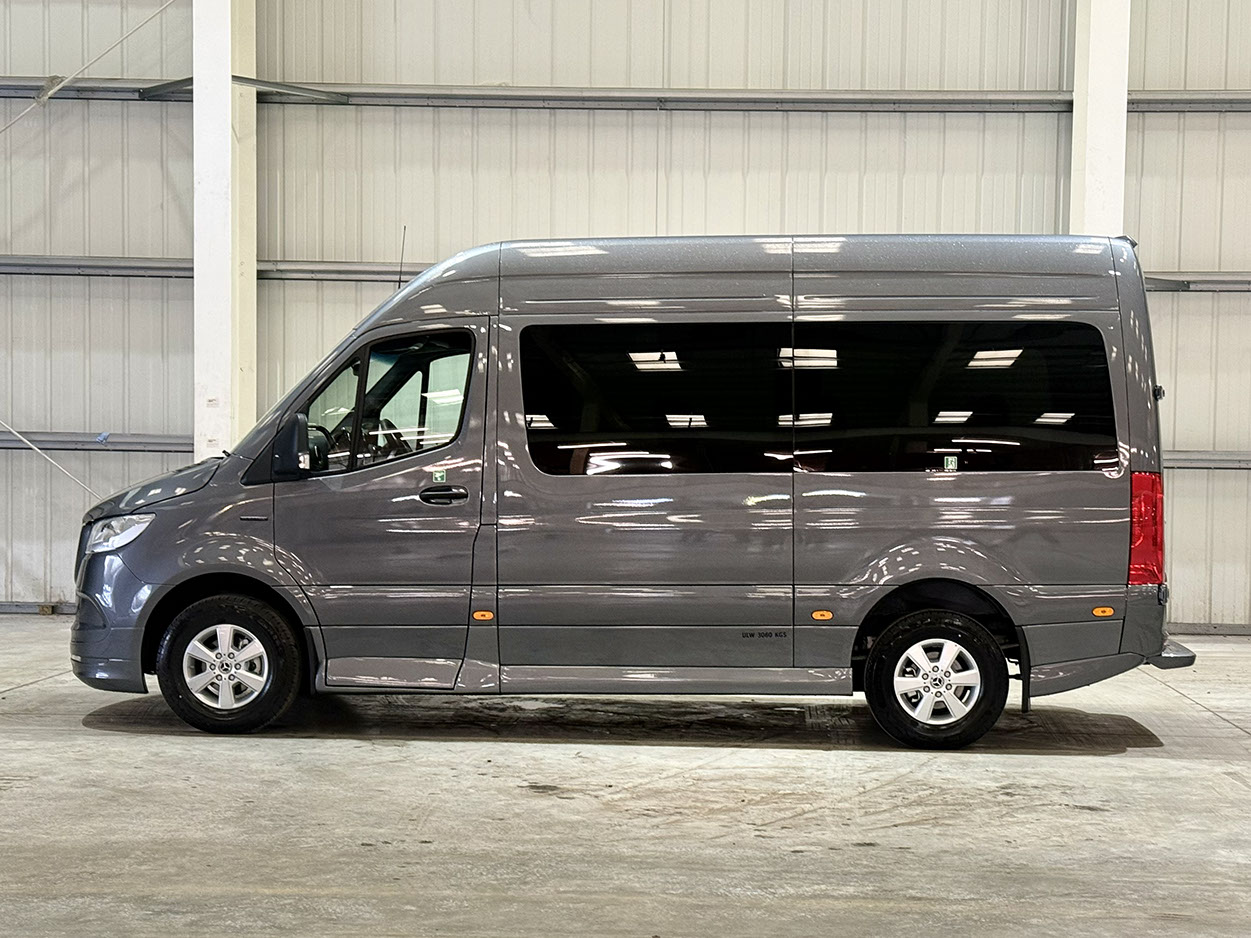

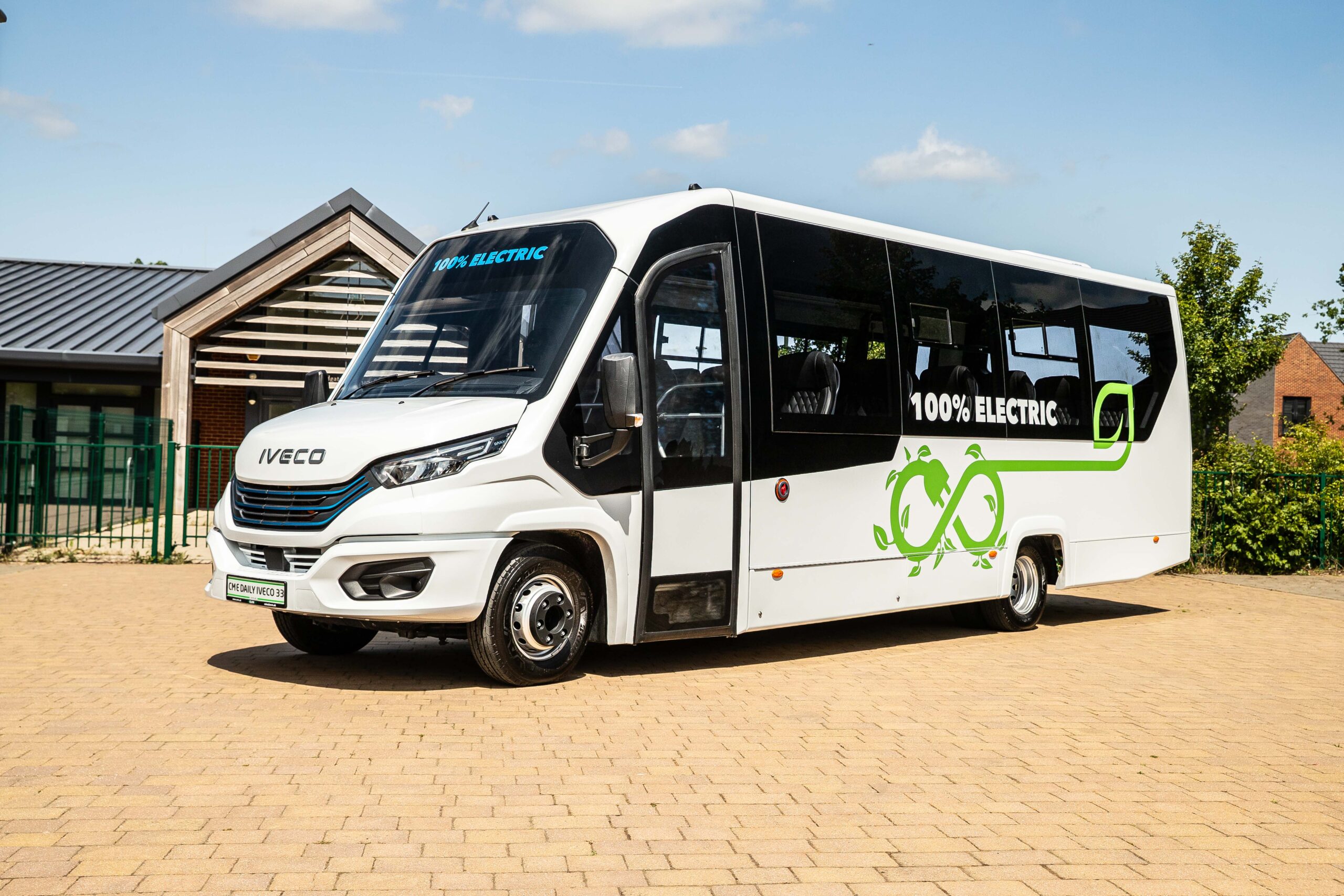
As of 1 April 2026, the UK’s public charging network stood at 119,080 chargers, according to the Department for Transport’s latest official statistics. That sounds like a lot — until you break it down by power rating. Only 27,372 of those chargers, around 23%, are rated “rapid” (50kW+) or above. Chargers powerful enough to be genuinely useful for a minibus or larger commercial vehicle — the “ultra-rapid” 150kW+ tier — make up just 11% of the national total.
That ultra-rapid segment is growing fast: Zapmap recorded roughly 9,893 chargers at 150kW or above by the end of 2025, up around 41% year-on-year, and the number of dedicated high-power “hubs” (six or more rapid/ultra-rapid devices at one site) grew by close to 39% to about 748 locations. But growth from a small base is still a small base. For an operator trying to run a minibus route on a daily schedule, a 41% jump nationally doesn’t mean much if there isn’t a hub within reach of their depot.
This is precisely the segment Chargd is aimed at: purpose-built, high-capacity sites designed around commercial vehicle needs, not the standard on-street or destination chargers that make up the bulk of the wider network. According to DfT figures, “destination” chargers (car parks, hospitality venues) account for 52% of the total network and “on-street” chargers a further 32% — neither category is built for a fleet of minibuses needing a fast daytime top-up.
The regional picture matters just as much as the national one, and it’s here that the disparities are most stark. DfT’s regional breakdown of rapid-or-above chargers per 100,000 residents shows just how unevenly high-power infrastructure has been distributed:
| Region | Rapid+ chargers per 100,000 population |
| Scotland | 57.2 |
| South West | 46.4 |
| East of England | 46.2 |
| East Midlands | 44.2 |
| West Midlands | 43.3 |
| UK average | 39.5 |
| Wales | 39.6 |
| North West | 37.9 |
| South East | 37.3 |
| Yorkshire and the Humber | 34.7 |
| North East | 34.4 |
| London | 27.0 |
| Northern Ireland | 18.4 |
A few things stand out. First, London — which has by far the highest number of chargers overall per capita (340 per 100,000) — actually has the second-lowest rate of rapid-or-above provision, because so much of its network is made up of standard on-street points for private cars rather than high-power commercial infrastructure. Second, Northern Ireland lags well behind every other UK nation and region on rapid charging access. Third, Scotland leads the table comfortably, a pattern that lines up with what’s happening in vehicle registrations too: SMMT data shows Scottish zero-emission bus and coach registrations surged 162.3% in the latest reporting period, which industry analysts attribute in part to targeted government support through the Scottish Zero Emission Bus Challenge Fund and the UK-wide Zero Emission Bus Regional Areas (ZEBRA) scheme. Where public investment has been most deliberate, both infrastructure and uptake have followed.
By contrast, minibus registrations nationally were essentially flat, dipping 0.7% to 4,784 units in the same period — a notably weaker performance than the double-digit growth seen in single-deck and double-deck buses. That gap is telling: it’s the smaller vehicle segment, typically run by smaller and more cost-constrained operators, that’s struggling to make the switch, even as larger fleet operators with more capital and negotiating power pull ahead.
Why depot-sharing changes the calculation
Ask fleet operators what’s actually stopping them from going electric, and the answer is consistent. In one widely cited Arval Mobility Observatory survey, 59% of fleets not yet considering EVs named a lack of public charging infrastructure as their single biggest barrier — ahead of both purchase price and range anxiety. More recent industry commentary points to the same bottleneck further up the chain: at the SMMT’s Electrified Summit, delays and uncertainty around securing grid connection capacity were repeatedly flagged as the most significant obstacle to depot electrification, a problem compounded by rising demand for grid capacity from data centres and other energy-intensive users.
For a small operator, that grid connection problem is often a dealbreaker on its own. Installing high-capacity charging at a private depot can mean lengthy grid upgrade applications, six-figure capital costs, and years of lead time — well beyond what a community transport provider or a five-vehicle minibus firm can absorb. The UK government has recognised this: a £170 million boost to the Depot Charging Scheme now allows eligible businesses to claim up to 70% of installation costs, capped at £1 million, specifically for vans, coaches and HGVs. That’s a meaningful subsidy — but it still requires an operator to go through the process of building their own site from the ground up.
Chargd sidesteps that entirely. The pitch is simple: don’t build a depot, plug into one that already exists. No grid connection application, no capital outlay for civil works, no multi-year wait — just pay-as-you-go access to infrastructure that’s already been engineered for exactly this kind of commercial, high-volume charging demand.
The obvious limitation is coverage. Chargd ‘s seven live sites, however useful, don’t yet map onto the areas where rapid-charging provision is weakest. Northern Ireland — the region with by far the lowest rapid-charging density — has no Chargd site among the initial cohort, and Stagecoach doesn’t operate there. The North East and Yorkshire and the Humber, both below the UK average for rapid-plus charging, currently have partial coverage at best (Stockton sits in the North East; nothing yet serves Yorkshire and the Humber directly). As the network expands across Stagecoach’s 100-plus depot estate through 2026 and beyond, how evenly that rollout reaches the regions with the weakest existing infrastructure — rather than simply the areas with strongest commercial demand — will determine whether Chargd genuinely levels the playing field for smaller operators, or mainly benefits those already based near a well-served hub.
For now, the answer to the original question is a cautious yes: for operators near one of the initial seven depots, Chargd removes the single biggest capital and infrastructure barrier to running electric minibuses, and does so in some of the very high-power charging categories where the national network is thinnest. Whether it becomes a genuinely national solution — one that reaches the community transport charity in Sunderland as readily as the coach firm in Cambridge — depends on how quickly, and how evenly, the rollout reaches the rest of the country.
We have covered funding available to coach and bus operators across UK, Ireland and NI. Click here to browse all funding and grant articles.
Whether you’re opting to switch your fleet to electric, or building and replacing your diesel models EVM can help. We have a huge range of minibuses and midi coaches including those with PSVAIR and PSVAIR prep. Contact a member of our sales team for full details.
Sources: Stagecoach Solutions, Installer Online; Bus & Coach Buyer; Cambridge Independent; SMMT; GREENFLEET; Fleet News; FleetPoint; Cambridgeshire Chamber of Commerce; Stagecoach Solutions; Department for Transport, Public electric vehicle charging infrastructure statistics: 1 April 2026; New Civil Engineer/Zapmap; electrive.com; EVM UK; EV Infrastructure News; Arval Mobility Observatory (via Fleet News).
Please fill in your details below and a member of our team will be in touch with you as soon as possible.


