

PSVAR has been in place for over 20 years, so most operators are already familiar with its requirements and exemptions. The more recent introduction of PSVAIR, along with its own funding and exemptions, has proved a bigger source of confusion. Andy Warrender, Operations Manager for Coaches at the RHA, set out the current picture for attendees:
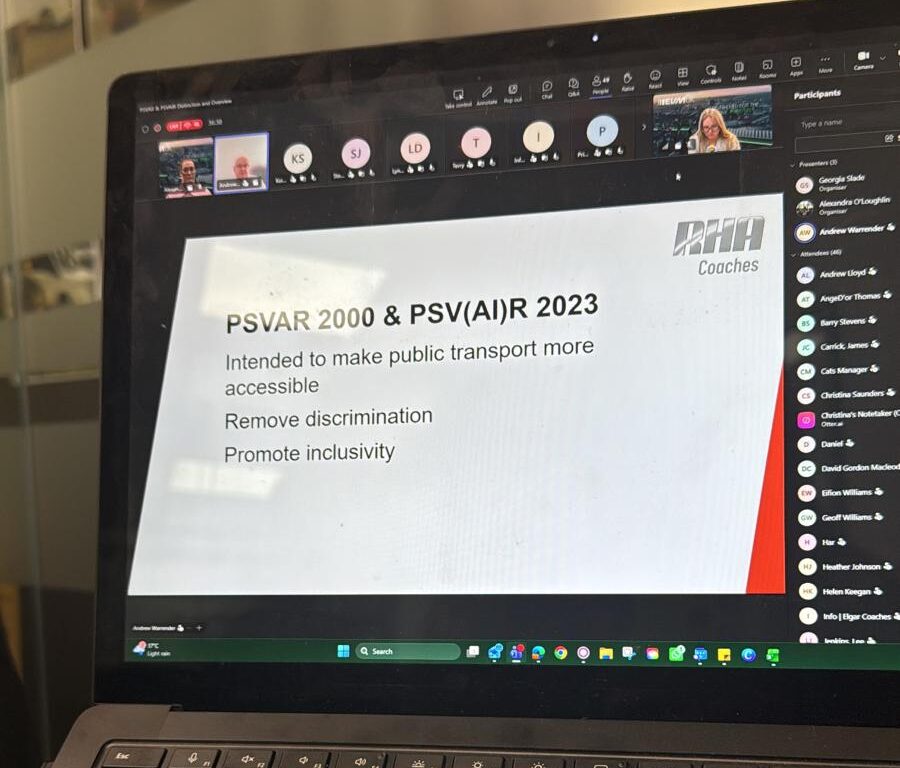
“PSVAR and PSVAIR are regulations the government introduced to make public transport more accessible, particularly for people whose mobility, sight or hearing might otherwise limit their access to travel. The intention was to remove discrimination and promote greater inclusivity, PSVAIR’s features help those groups access the same level of service as their peers and hopefully give them more confidence to travel. There are mixed views on what the regulations actually mean for operators, and we found there was a real need for a broad overview to help people understand where their business sits, which services and vehicles are affected, and what exemptions apply.”
One of the clearest takeaways from the session was just how differently PSVAR and PSVAIR are scoped. PSVAR doesn’t apply until a vehicle’s capacity reaches 23 passengers, but PSVAIR kicks in at 17, pulling a much wider range of vehicles into scope, including many minibuses that operators might have assumed were exempt.
The session also worked through the exemptions in detail from the phased exemption for vehicles registered before October 2014, to the current coach-only carve-out for emergency rail replacement work, to the “15% rule” that can exempt long-distance routes with only a short cluster of closely spaced stops. The full breakdown of these is available in the FAQ guide below.
The live Q&A was one of the most valuable parts of the session, sparking plenty of engagement from attendees. One question in particular stood out: with operators using a mix of different supplier systems, how can consistent audio-visual passenger information be guaranteed especially on rail replacement work, where programming often has to happen at short notice?
It’s a challenge the wider industry is already looking at. RTIG has scheduled an Audio Visual Announcement System Programming Roundtable for 2 September 2026, bringing together operators, authorities, suppliers and other transport stakeholders to explore how the process of creating, maintaining and deploying audio-visual announcement content can be simplified and made more efficient. It’s an invitation-only event. Operators interested in attending should contact RTIG directly but it’s a welcome sign that the programming burden operators raised on the day is being taken seriously. Hopefully it will also address the support operators need with programming more generally, particularly under the tight timeframes typical of rail replacement work.
In the post-event survey that we distributed to all our attendees we had positive feedback and scores. 86% of attendees rated the session as ‘great’ and there was interest in future events and topics. Here is some attendee feedback:
“Thank you for allowing me to attend, I found the subject very interesting and well presented.”
“I found this topic interesting and informative thank you very much.”
Please fill in your details below and a member of our team will be in touch with you as soon as possible.


