
What the Future of Rural England Report Means for Transport Operators

Defra's Future of Rural England Report puts transport at the heart of rural policy. Here's what it means for council, community and commercial transport operators.

If you spend your working life getting people to hospital appointments, school, the high street, or a Saturday match — rather than reading government policy papers — the Future of Rural England Report, published by Defra in July 2026, is still worth ten minutes of your time. Transport runs through almost every page of it, not as a footnote, but as one of the six themes the government has identified as make-or-break for rural communities.

Here’s what’s actually in it, and what it means if you run — or fund, plan, or commission — transport in a rural, semi-rural or mixed rural-urban area.

Why this report exists

The report is the output of a year-long Rural Taskforce, set up by Defra in April 2025 to work out why rural communities keep being an afterthought in national policy, and what to do about it. Rather than reviewing policies after the fact, the government says it wants rural needs built in from the start — what it calls “rural proofing.”

The headline numbers give some sense of scale: rural areas cover around 85% of England’s land, are home to 9.7 million people, and contribute more than £259 billion a year to the economy. And yet rural productivity still lags urban areas by a widening margin — something the report links directly back to transport and connectivity gaps.

Transport is named as a core barrier — not a side issue

What’s striking is how often transport shows up as the reason something else isn’t working, across sections you wouldn’t expect:

  • Skills and jobs: the report notes that limited transport and long journey times are a real barrier for young people trying to reach colleges, apprenticeships and work placements — and cites this as a factor in weaker further-education progression in rural areas.
  • Healthcare access: longer journeys and patchy public transport are flagged as contributing to poorer health outcomes in rural communities, including lower cancer survival rates and difficulty reaching mental health services. The report specifically highlights mobile screening units and at-home test kits as workarounds for the transport gap.
  • Housing and planning: the report is blunt that new housing without matching transport links risks making inequality worse, not better — so transport is now expected to be part of the conversation when local authorities plan development.
  • Tourism and the visitor economy: with over 67,000 rural tourism businesses employing 15% of the rural workforce, and rural areas holding the majority of England’s protected heritage sites, the report treats visitor transport as central to rural economic growth — not a nice-to-have.

If you provide transport for any of these journeys — commuting, education, healthcare, or days out — the report is effectively naming your service as critical national infrastructure, even where funding hasn’t always reflected that.

Low-Floor Cityline is available as either an electric or diesel variant.

The funding and policy levers that actually affect operators

A few commitments are worth knowing about specifically:

  • Bus Services Act and Local Authority Bus Grants – The government has named improving transport, delivered through the Bus Services Act and the new Local Authority Bus Grant, as one of its core “invest in enablers” commitments. From April 2026, DfT bus funding for local authorities has been consolidated into a single needs-based grant, alongside the Bus Service Operators Grant paid to commercial and community operators. The Bus Services Act 2025 also makes it significantly easier for local and combined authorities to run franchising schemes — several rural and semi-rural areas, including York & North Yorkshire, Cornwall, and Cumbria, are already running franchising feasibility pilots.
  • Devolution is handing transport powers to more local authorities – Under the English Devolution and Community Empowerment Act, Strategic Authorities are gaining real powers over local transport plans, bus strategy, partnerships with operators, and franchising — with “rural affairs and coastal communities” written in as a specific area of responsibility. More than half of England’s rural population is expected to live under some form of devolved transport governance within the next couple of years. If you operate in an area gaining a new Mayoral Strategic Authority, expect your local commissioning landscape to shift.
  • Demand-responsive transport (DRT) has government backing – The report and related DfT guidance point to DRT — booking-based, flexible-route services — as a genuine growth area for low-density rural networks, with examples like Leicestershire expanding from a single Rural Mobility Fund pilot zone to eleven DRT zones on the back of bus funding. If your patch has commercially unviable fixed routes, this is a model the government is actively willing to fund.
  • Rural EV charging is roughly matching rural population share – Around 17% of public EV chargepoints in England and Wales are now in rural areas — broadly in line with the 17% of the population that lives rurally. For operators weighing up an electric minibus or fleet vehicle, that’s a meaningfully different picture than a few years ago.
  • Digital and visitor economy support – Project Gigabit and the Shared Rural Network are still the government’s main tools for closing the rural-urban digital gap, which matters directly for anyone running app-based booking, real-time tracking, or online ticketing in areas with patchy connectivity. On the tourism side, the upcoming Visitor Economy Growth Strategy and existing Local Visitor Economy Partnerships (LVEPs) are positioned as the route into coordinated investment and marketing support for transport tied to tourism.

What this means practically, depending on who you are

Council and combined authority transport 

The devolution powers and consolidated bus grant funding mean more local control, but also more responsibility for getting local transport plans and bus strategies right. The report’s emphasis on rural proofing gives you a stronger mandate to argue for rural routes in funding bids that might previously have been judged purely on passenger-per-mile economics.

Community transport operators

The report’s repeated framing of transport as a health, education and social-inclusion issue (not just a mobility one) is useful ammunition when bidding into local grant funding, Rural Housing Enabler-style community programmes, or health service commissioning for patient transport.

Commercial minibus and coach operators serving tourism and leisure

The growth focus on the visitor economy, heritage tourism, and LVEPs signals where local authority and DCMS funding is likely to flow next. Operators who can show they connect passengers to National Parks, National Landscapes, or heritage sites are aligned with where policy attention (and money) is heading.

Anyone running school, college or work-placement transport

The report explicitly links transport gaps to weaker progression into further and higher education and to apprenticeship access. Expect this to feature more heavily in Skills England and Local Skills Improvement Plan funding conversations going forward.


The bottom line

For years, rural transport operators have made the case that what they do isn’t just a service — it’s the thing that determines whether someone can get to a hospital appointment, a job interview, or a college open day. The Future of Rural England Report is the first time that argument has been written into a formal cross-government strategy, with named funding mechanisms (Bus Services Act, Local Authority Bus Grants, Rural Mobility Fund-style DRT support, devolved transport powers) attached to it.

None of this guarantees smoother funding rounds overnight. But it does give operators — council, community and commercial alike — a clearer, better-evidenced case to make when bidding for funding, planning fleet investment, or making the argument that a rural route deserves to survive.
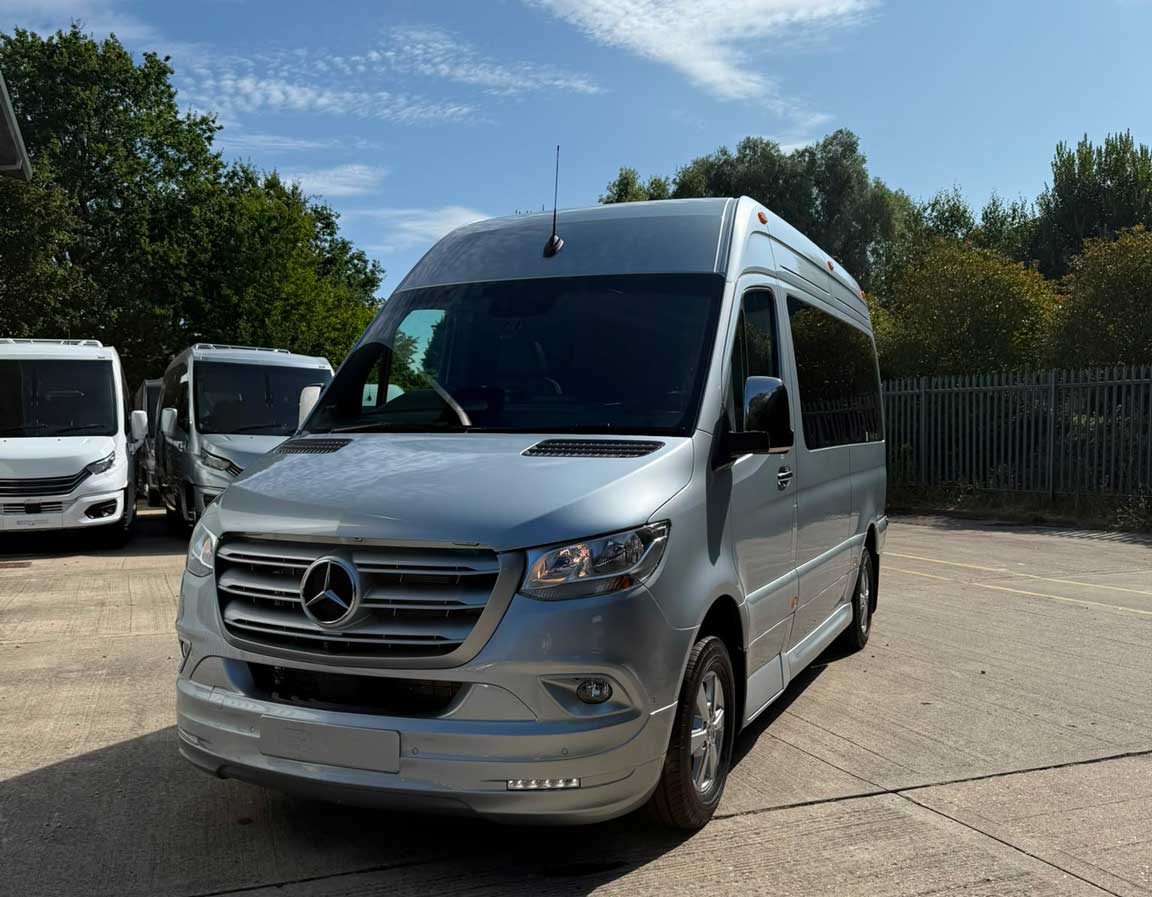
The EVM Trend is available with either an electric power train or diesel engine and can be modified to have 9 – 13 seats.

Email Us

Please fill in your details below and a member of our team will be in touch with you as soon as possible.

Contact Details
Industry Sector
Message
Privacy Notice
EVM UK will use the details you supply to enable us to contact you with information specific to your enquiry. We may also from time to time send you updates of our latest stock vehicles and new product releases. Full Privacy Policy can be viewed here.